The Holy Clover
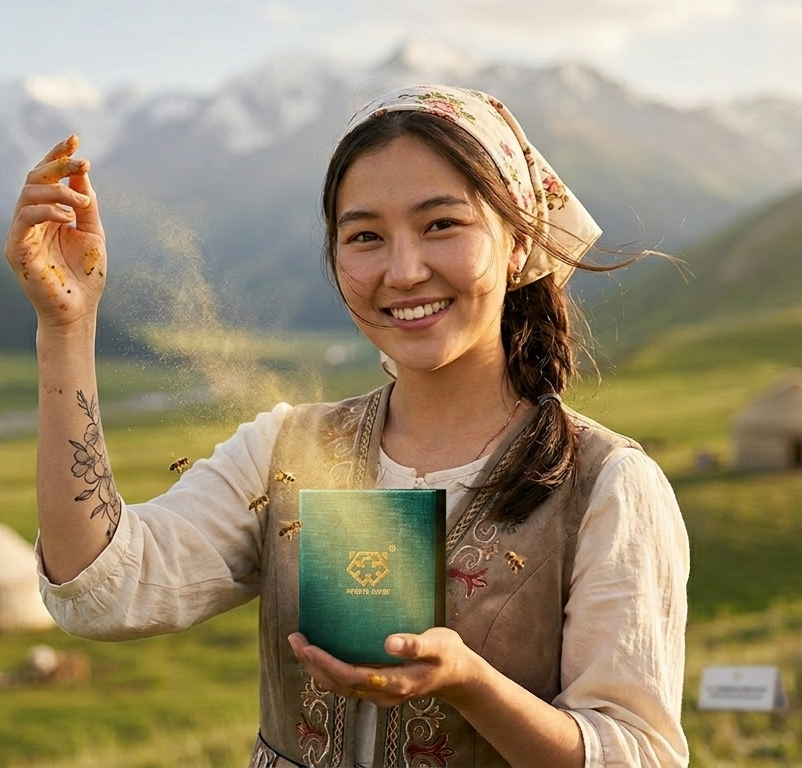

The Holy Clover
Nobody planted it.
That is the first thing to understand about sainfoin. It does not need you. It was here before the first beekeeper climbed these slopes, before the first hive was built from pine wood and prayer, before anyone thought to give it a name. In French they called it sainfoin — holy hay. In English, holy clover. In the mountains of Kyrgyzstan, the bees simply call it home.
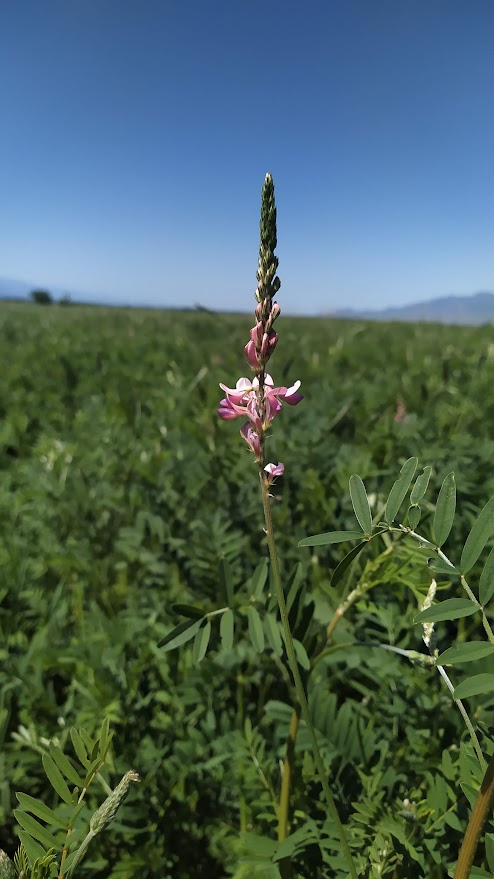
It grows where other plants give up. Rocky slopes, thin soils, the windswept edges of jailoos where the ground is half-broken limestone and half-stubbornness. Sainfoin does not complain about this. It sends its roots deep, fixes its own nitrogen, asks nothing from the earth except permission to exist. And each June, without fail, it answers the permission with pink.
Not a soft pink. Not a shy pink. A dense, almost violent pink — hundreds of small florets stacked along each stem like a spiral staircase built for something tiny and purposeful. From a distance, a hillside in sainfoin bloom looks like it is on fire with a cool, rosy flame.
The bees see it differently. They see it in ultraviolet, in frequencies we cannot imagine, and what they see draws them from kilometers away. Sainfoin produces nectar with unusual generosity — not just in quantity but in quality. High in sucrose. Rich in the particular sugars that become, in the dark warmth of a hive, something extraordinary.
Sainfoin honey does not taste like flower.
This surprises people. They expect something floral, perfumed, the flavor of a garden. What they get instead is cleaner than that. Sharper. There is a faint herbal edge, almost medicinal — not unpleasant, the opposite — like the air itself has been pressed into a jar. Beekeepers in Kyrgyzstan say it is the most honest honey. No disguise. No sweetness layered over nothing. Just the mountain, the limestone soil, the particular stubbornness of a plant that chose to live where nothing was easy.
It crystallizes beautifully. Fine-grained, almost silky, turning from liquid gold to a pale cream that holds the impression of a spoon. Old healers in the villages kept a jar of it specifically for this — solid sainfoin honey, pressed onto burns, onto sore throats, onto wounds that wouldn't close. Whether it was the honey or the faith that healed, no one thought to ask.
There is a peculiar relationship between the bee and this flower that goes beyond feeding.
Sainfoin needs bees. Its florets are designed — engineered, almost — for the weight and shape of a bee's body. When a bee lands on the lower petal, the flower opens. The anthers spring upward and dust the bee's underside with pollen. The bee, unbothered, moves to the next floret. The next plant. The next hillside. Without this, sainfoin cannot set seed. Without seed, no next generation of plants. Without plants, no nectar. Without nectar, a whole ecosystem quietly unravels.
The bee does not know it is doing this. It is simply hungry. It is simply following the ultraviolet signal, landing, drinking, moving on. But the consequence of its hunger is the continuation of an entire flower's existence.
This is what the word holy might actually mean — not sacred in a distant, untouchable way, but essential. Load-bearing. The kind of ordinary thing that, if you removed it, everything downstream would collapse.
In June, if you stand on a hillside above Kochkor or Naryn when the sainfoin is at its peak, you will hear the meadow before you see it. A low, continuous hum — not loud, not dramatic — the sound of ten thousand small creatures doing the most important work in the world, convinced it is simply lunch.
But the bees are not the only ones who know this flower. Horses know it too — and horses, in Kyrgyzstan, know everything worth knowing about a pasture. Thoroughbreds and mountain horses alike seek out sainfoin with purpose, pulling at the pink stems with something that looks less like grazing and more like intention. Old horsemen noticed this centuries ago. They said sainfoin gave a horse its fire — the extra reach in the stride, the willingness to climb, the stamina that separated a good horse from a great one. They were not wrong. The plant is exceptionally rich in protein, minerals, and natural compounds that build muscle and sustain endurance. A jailoo full of sainfoin was not just good pasture. It was a training ground.
Perhaps this is why researchers began looking more closely at what happens when bees concentrate all of that into honey. What the horse takes in through kilograms of green stem, the bee distills into something small and dense and potent. Scientists studying sainfoin honey have found it unusually rich in antioxidants, bioflavonoids, and compounds that support circulation and vascular health. Many consider it among the most beneficial honeys for the cardiovascular system — strengthening blood vessel walls, improving blood flow, reducing inflammation at the cellular level. For men's and women's health alike, it is taken seriously not as folklore but as something the laboratory is only now beginning to catch up with. What the horsemen knew in their bones, the scientists are learning in their labs.
In the Kemin valley, where the river runs cold and fast between walls of spruce and the Kungey Alatoo ridge holds the northern sky, the sainfoin grows so thick along the lower slopes that local beekeepers move their hives no more than a kilometer all season. The flower comes to them. In Kemin the honey carries something extra — a faint crispness, like cold water and pink petals dissolved into the same thing — that people who grew up there recognize instantly and cannot explain to anyone who didn't.
And then there is Issyk-Kul. The lake changes everything around it. Two hundred kilometers long, never freezing, breathing its own warm breath into the surrounding mountains — it creates a microclimate unlike anywhere else in Central Asia. The sainfoin on the southern and northern shores blooms longer here, stretched by the lake's warmth into a season that outlasts the highlands by weeks. Beekeepers from across Kyrgyzstan know this, and every June a quiet migration happens — hives loaded onto trucks, moved toward the water, positioned along the terraced hills where the pink flower meets the blue horizon. The honey from Issyk-Kul sainfoin has a roundness to it, a softness at the finish, as if the lake itself got into the nectar somehow.
Lean in close to a stem anywhere in these mountains. Watch one bee work its way up the spiral staircase of florets, methodical, unhurried, dusted pink at the legs.
This is what becomes the honey. This exact moment. This bee. This flower. This limestone hillside that nobody planted, on a mountain that was old before any of us had words for old. Carried in the bodies of horses for centuries. Studied now under laboratory light. Pressed into jars by hands that know these valleys the way the sainfoin knows the soil — by root, by season, by an attachment that needs no explanation.
Holy is the right word after all.

